Israeli forces displace nearly 2,000 residents in Hebron ahead of election
Military operations in the West Bank city intensified after a checkpoint attack, with officials citing security needs while residents describe forced evictions.
By Zara Ahmed ·
Residents of Hebron, the largest city in the West Bank, faced a sudden closure and mass displacement this week as Israeli forces seized homes following a fatal gun attack. The operations have placed the city at the center of the upcoming Israeli election, with Prime Minister Benjamin Netanyahu using the crisis to bolster his security record.
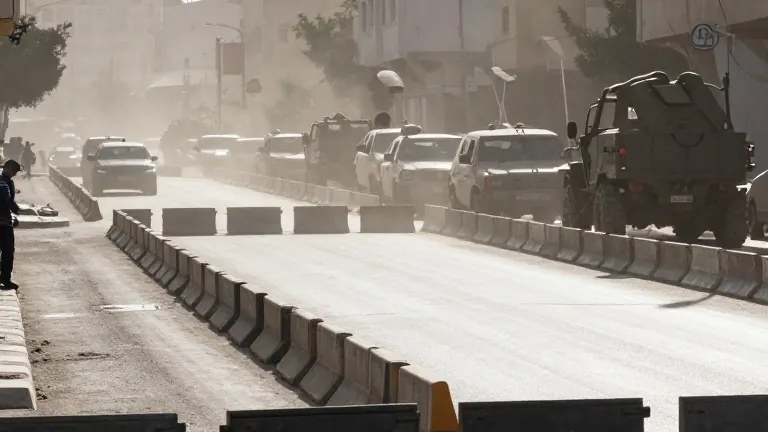
The conflict escalated on Friday when two Israeli soldiers were killed at a military checkpoint. In response, Netanyahu and Finance Minister Bezalel Smotrich visited the area on television. They pledged a swift military response, warning of operations on a scale not seen in the West Bank since the occupation began nearly 60 years ago. By Friday evening, the city of 250,000 was sealed off.
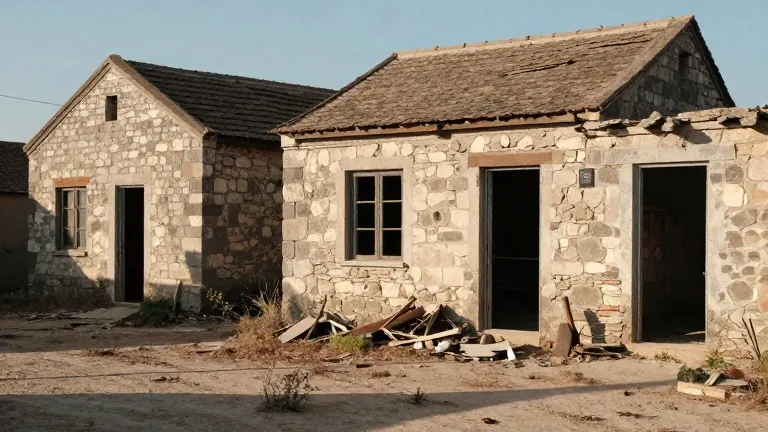
The neighborhood of Farsh al-Hawa, located near the attack site, was leveled. An industrial zone containing car workshops and a ceramics plant was reduced to rubble by Sunday morning. Simultaneously, the district of Ein Deir Baha was emptied. Israeli officials stated that at least one of the two attackers, both killed at the scene, resided in that area.
Fahed Ahmaro, an imam in the district, described being woken at midnight by military loudspeakers ordering residents to leave. Thirty members of his family lived in his home. As he returned to collect belongings, he learned the army had blown up his gate. "You don't know what you have until you lose it," Ahmaro said. He spent Sunday shopping for his grandchildren, uncertain when his family would return.
The Hebron municipality reported that 370 families, totaling nearly 2,000 people, were displaced from Ein Deir Baha. The Israeli army countered that residents left voluntarily and were permitted temporary evacuation. Ahmaro rejected this, asking, "Never, never, never. Why should I leave my house?" Abdul Halim al-Tamimi, 77, said soldiers gave his family 10 minutes to leave at 1:30 a.m. By Sunday, his villa had been converted into an army headquarters and draped in Israeli flags.
The army stated that approximately 2,000 locals belong to the Jaba'a clan, which it linked to the gunmen and Hamas. Residents argued the clan has only 150 members and lacks a radical reputation. Some suggested the operation served electoral publicity purposes. By Sunday evening, all roads in and out of Hebron remained closed to cars behind steel barriers. Only pedestrians could pass, and delivery drivers reported attacks by settlers at nearby junctions.
Hebron Mayor Yousef al-Jabari described the measures as collective punishment. He noted that people were dragged from their homes and media access to the district was restricted. Although Palestinians in the occupied West Bank cannot vote in Tuesday's election, the outcome may influence their daily lives in the region.
Source: The Guardian