Democrats Take Both Chambers of Congress
Voters across the country rejected Republican candidates, shifting control of the Senate and House to the opposition party.
By Adam Richardson ·
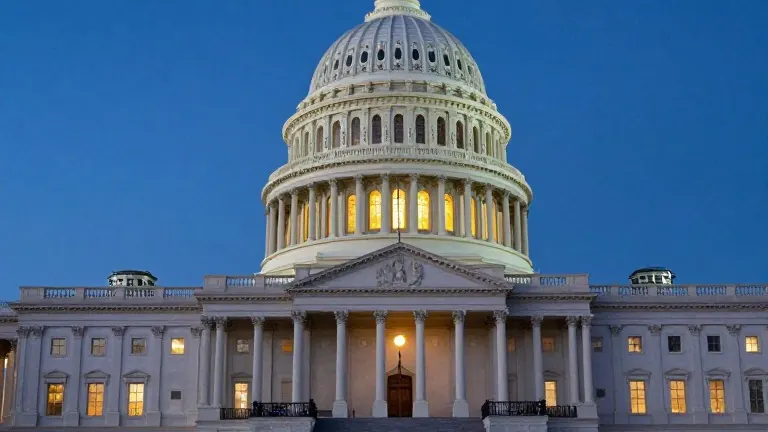
Democrats secured control of both the Senate and the House of Representatives in Tuesday's midterm elections. The outcome represents a major shift in power that will define the final two years of President Donald Trump's term. Party leaders in Washington indicated they intend to use their new authority to launch investigations into top administration officials.
The Democratic victories extended into states that have favored Republicans for decades. James Talarico won a Senate seat in Texas, a state where no Democrat held statewide office for more than 30 years. Annie Andrews defeated incumbent Sen. Darline Graham in South Carolina. In Michigan, Abdul El-Sayed defeated Republican Mike Rogers. Sen. Susan Collins of Maine also lost her seat to Democrat Troy Jackson.
Economic concerns and perceptions of corruption drove the voting patterns. An Associated Press voter poll found that three-quarters of voters described the economy as poor or not so good. About 8 in 10 respondents reported that inflation caused financial hardship for their households. Roughly half of voters cited government corruption and the cost of living as key factors in their choices for Congress.
President Trump attempted to influence the races but could not prevent the losses. He endorsed candidates who ultimately lost, including Ken Paxton in Texas and Darline Graham in South Carolina. Trump posted on social media before polls closed on the West Coast, stating he was not on the ballot. He vowed to veto legislation passed by the new Democratic majority. He shared an image of a red baseball cap with the word VETO stenciled on it.
The shift in Congress will alter the legislative landscape. Democratic Senate Leader Chuck Schumer described the results as a generational remake of the Senate map. Democratic House Leader Hakeem Jeffries said the American people are asking for transformational change. Republican Senate Majority Leader John Thune wrote that his party will work with the president to counter what he called Democrat extremism.
Voters in red states showed dissatisfaction with the current direction of the country. About three-quarters of respondents in the poll said they felt angry or dissatisfied with the nation's trajectory. This sentiment was present in both blue and red states. Only about one-third of Hispanic voters backed Republican candidates in local House races, according to the poll.
Governors races also saw major changes. Democrats won reelection in Pennsylvania, Illinois, Maryland, Massachusetts, and New York. In Texas, Democrat Gina Hinojosa defeated Republican Gov. Greg Abbott. In Georgia, Keisha Lance Bottoms won the governor's race. In Florida, Byron Donalds won the governor's seat, becoming the first Black Republican elected to that office in the nation.
Source: WSVN · original report published
More Politics · Miami news · Report a business · Got a Story?