Eight Million Struggle With Drought
El Niño has dried up rivers and cut power in Papua New Guinea, prompting leaders to declare a national crisis.
By Zara Ahmed ·
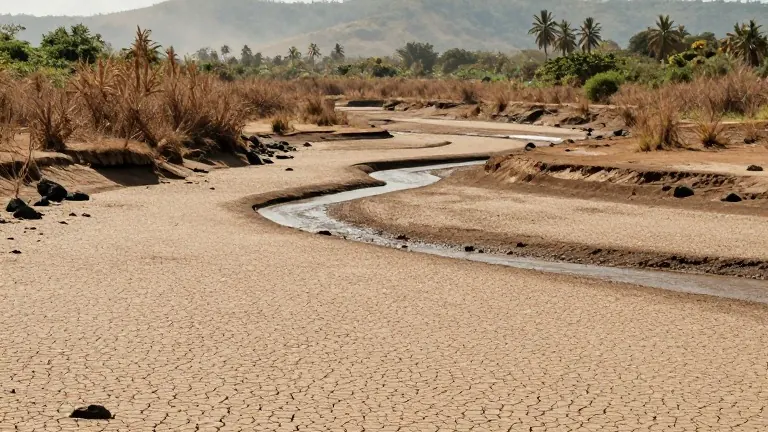
As many as eight million people in Papua New Guinea are currently affected by extreme drought conditions driven by a historic El Niño event. The weather pattern has triggered shortages of food and water, reduced electricity supply, and disrupted schooling across the Pacific nation.
The National Weather Service declared the onset of El Niño in June, but assistant director Kasis Inape noted that much of the country was already experiencing drought at that time. He explained that the phenomenon shifts warm tropical waters eastward, starving the region of rain. Inape stated that because the nation relies on rainfall for subsistence farming, the lack of precipitation has severely impacted local food production.
Some areas have received less than a quarter of their usual rainfall since August. Inape warned that while some short-term relief is forecasted, there are concerns that El Niño may shorten the wet season, which typically runs from November to April. He emphasized that just two months of rain is insufficient for crops to grow and water levels to stabilize.
Residents report that rivers and creeks have dried up, causing family food gardens to shrink. In Morobe province, smaller rivers have disappeared, leaving families without water for drinking or cooking. Resident Theophil Zarack said schools and health centers are now operating for only half a day, with some clinics stopping inpatient care due to water shortages. In Leklu village, resident Martha Zureno described walking miles daily to fetch water, noting that local crops have died and even gold panning has become difficult without water flow.
Humanitarian groups describe the situation as a national crisis, with the Community Coalition Against Corruption citing a lack of a coordinated plan to protect vulnerable communities. Peter Aitsi, co-chair of that coalition, said the government must conduct proper assessments of the impacts, particularly on rural areas. He noted that while urban centers have been shielded so far, electricity blackouts and food shortages from drought-stricken regions may soon affect the capital.
In Port Moresby, PNG Power has implemented planned blackouts after falling dam levels cut hydropower generation. The utility company expects disruptions to continue for up to ten months while it manages dam releases to protect the city’s water supply. Aitsi also pointed out that the capital has been covered in smoke haze from fires in the region, which scientists link to El Niño.
Prime Minister James Marape has directed provincial and district authorities to prepare for a prolonged dry season. His government is examining financial arrangements to support disaster responses. Marape stated that Cabinet is reviewing provisions to ensure districts and provinces can respond to disasters as they occur.
Source: The Guardian