Empty chairs define China's plenum as Xi prepares to fill power voids
With only two of forty-four military committee members remaining, the four-day session in Beijing aims to reassert control ahead of next year's leadership vote.
By Zara Ahmed ·
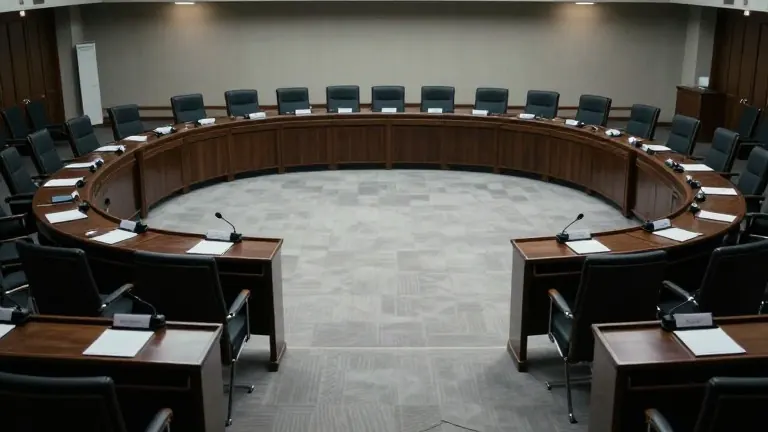
The atmosphere in Beijing is defined by absence. As roughly 300 members of the Communist Party Central Committee gather for the Fifth Plenum, the room holds the physical weight of recent purges. Delegates arrive for a four-day session that began Monday, with many looking around at the empty seats where senior figures once sat. The gathering serves as a strategic pause before the next Party Congress, scheduled for next year, where a new central committee will be appointed.
The scale of the personnel shake-up is stark. The Asia Society Policy Institute estimates that of the 44 military members appointed to the Central Committee in 2022, only two remain in their posts. The Central Military Commission, the seven-man body that commands China's armed forces, has been reduced to just two individuals: President Xi Jinping and one other general. This dramatic reduction leaves a vacuum in the leadership structure that the current meeting is designed to address.
State media have framed the session as a mechanism to tighten discipline within the Party's ranks. A readout from the 21-member Politburo issued earlier this September stated that the plenum would adopt decisions on persistently advancing the comprehensive strict governance of the Party. Experts interpret this language as a move to ensure obedience from distant officials. The term 'moral corruption,' frequently cited in recent investigations, is viewed as a tool to crack down on perceived disloyalty to Xi. Under this framework, a breach of Party loyalty can be reclassified as a moral failure, providing grounds for removal.
The timing of the meeting is critical. It takes place one year before the next Party Congress, the event where the Party sets its long-term priorities and selects its top leadership. While the Central Committee officially selects these leaders, the internal processes are kept secret. The next Congress is expected to reappoint Xi as the country's leader, a move facilitated by the earlier abolition of term limits. Past plenums have been used to declare Xi the core of the Party and to elevate his personal philosophy to the status of Chairman Mao's.
The specific location of the session has not been announced, a level of secrecy typical for these closed-door meetings. Previous plenums have been held at the Jingxi Hotel in Beijing. The session is scheduled to conclude on Thursday. Upon completion, a summary of decisions and a more detailed document will be made public. For now, the focus remains on the internal realignment and the appointment of new officers to the diminished Central Military Commission.
Source: BBC News