UH Mānoa Nursing Students Train in Airport Crash Simulation
Funding from the university's research office supported the Oct. 23 drill, which included trauma kits and resources for future classroom exercises.
By Dylan Moore ·
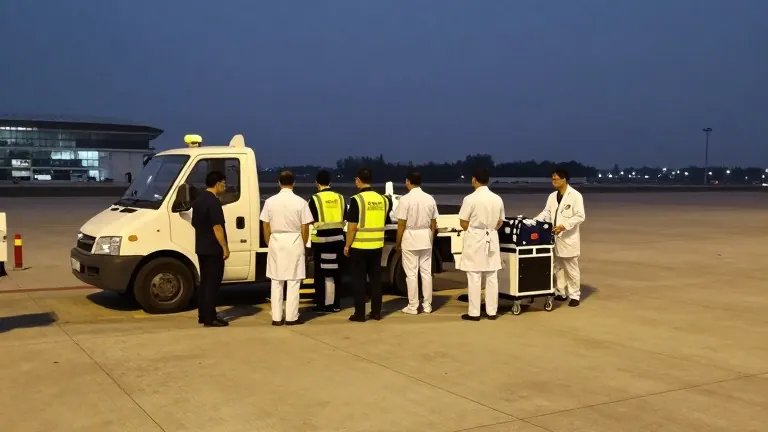
The University of Hawaiʻi at Mānoa allocated funds to equip roughly 125 nursing and dental hygiene students for a mass-casualty drill at Daniel K. Inouye International Airport. The exercise, held on Oct. 23, was organized by the Hawaiʻi Department of Transportation Airports Division as part of the Triennial Airport Disaster Exercise.
Students participated in a simulated airplane crash to test emergency response protocols. Senior nursing students acted as first responders on the tarmac, while student volunteers played the roles of injured passengers. The group worked alongside emergency personnel from local, state, and federal agencies to manage the high-pressure scenario.
Michele Bray, assistant professor and faculty lead for the event, stated that the drill focused on developing critical thinking and rapid decision-making skills. She noted that the airport partnership provides hands-on experience in disaster response that traditional classroom instruction does not offer.
Gary Glauberman, associate professor and chair of the UH Mānoa Department of Nursing, said the collaboration ensures graduates enter the workforce as skilled leaders. He emphasized that preparing future nurses is essential for strengthening community resilience in the face of natural disasters and other emergencies.
Amanda Miller, a 20-year Army combat veteran and first-year nursing student, said the rehearsal reinforced the value of preparation. "No matter how much education or experience you have, it is vitally important to practice, to rehearse," Miller said. "If you stay ready, you don't have to get ready."
Alejah Callorina, a second-year nursing student, participated as an injured passenger. She said the role shift helped her understand the patient experience better. "When you're on the nursing side, it's really easy to get caught up in tasks," Callorina said. "Playing the victim made me realize that we've got things going on too, and we're people as well."
Financial support from the UH Mānoa Office of the Vice Provost for Research covered the cost of trauma kits and medical shears for the event. The funding also secured simulation resources for future semesters, which will be used in classroom tabletop exercises and clinical skills laboratory activities.
Source: University of Hawaii News
More Business · Unethical Practices · Report a business · Got a Story?