Alaska Election: FBI visits donors while rural polling sites struggle
Labor and advocacy groups allege federal agents are pressuring contributors to a challenger's campaign as the state battles over voting access and election certification.
By Dylan Moore ·
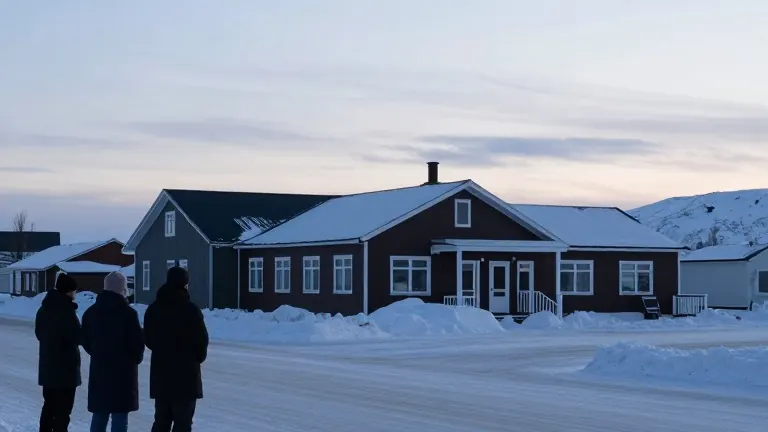
Federal agents have knocked on the doors of at least four donors to the campaign of Daniel J. Sullivan of Petersburg, a move that has drawn sharp criticism from labor unions and advocacy groups in Alaska. On November 2, the 907 Initiative and the Alaska AFL-CIO gathered outside the FBI’s Anchorage headquarters to demand an end to what they described as voter intimidation. The groups asked the U.S. Attorney for Alaska and the Department of Justice to protect ballot access rather than investigate legal contributions.
The federal probe centers on the Peltola campaign’s effort to recruit Sullivan, a candidate who shares the name of the incumbent senator. A Federal Election Commission complaint filed earlier this year accused the 907 Initiative of illegally coordinating with the challenger. The complaint focused on Amber Lee, a Democratic consultant who worked for the candidate while serving on the 907 Initiative’s board. Lee has denied any wrongdoing in the matter.
U.S. Attorney Michael Heyman and FBI Special Agent in Charge Matthew Schlegel announced on October 30 that the bureau had investigated potential criminal charges for several months. As part of that investigation, agents identified individuals who made legal donations to Sullivan’s campaign. The Trump Administration has indicated it will challenge the certification of the election only if the incumbent Republican loses.
Barry Bracken, a 79-year-old resident of Petersburg, said agents visited him at his home to question his contribution. Bracken stated that he donated with full knowledge of whom he was supporting. He asked the FBI and U.S. Attorney’s Office whether they planned to investigate donors to Sen. Dan Sullivan’s campaign to see if they were confused about their choice.
Heidi Drygas, president of the Alaska AFL-CIO, described the federal actions as a distraction from the administration of the vote. She noted that the Trump Administration appears to be using the FBI and DOJ to intimidate voters while the Republican state government suppresses votes in rural and Alaska Native areas. Drygas argued that the state is barring access to voting in rural Alaska despite claiming the opposite.
The disparity in voting access has become a central point of contention. Voters in Anchorage and other urban centers have had 16 days to cast their ballots. In contrast, many rural voters have only one day, which represents 6% of the available time. Alaska is unique in that its elections are administered by the state rather than local jurisdictions. The Alaska Department of Elections, led by Lieutenant Governor Mike Dunleavy, lists over 100 rural voting sites as open.
Despite the official listings, at least 18 absentee in-person sites in rural communities experienced issues. Some failed to open on time, while others opened late or had problems during the early voting period. The Alaska Democratic Party and the Midnight Sun Independence Fund have filed lawsuits alleging these election integrity issues.
Legal battles have also emerged in federal court. On Sunday, Judge Sharon Gleason dismissed the United States case against the State of Alaska. The U.S. had sought a pre-emptive ruling to prohibit the Alaska Division of Elections from certifying results if voter confusion might impact the outcome. The state argued the U.S. lacked the legal authority to demand such relief. The United States immediately announced its intent to appeal the decision.
The state’s position is supported by interveners including Alaskans for Mary, the DSCC, the League of Women Voters, and Common Cause. These groups, along with two individuals, joined the Motion to Dismiss. The core of the state’s argument rests on the jurisdictional limits of the federal government in this specific electoral dispute.
As election day concludes, the tension between federal oversight and state administration remains visible. The 907 Initiative and Alaska AFL-CIO maintain that the focus should remain on the practical difficulties rural voters face. They point to the specific failures at polling sites and the limited window for voting as the primary issues requiring attention from both state and federal officials.
Source: Must Read Alaska