France sees new protest clashes
Riot police used tear gas in several cities on Halloween, capping a week of demonstrations over economic strain.
By Elizabeth Turner ·
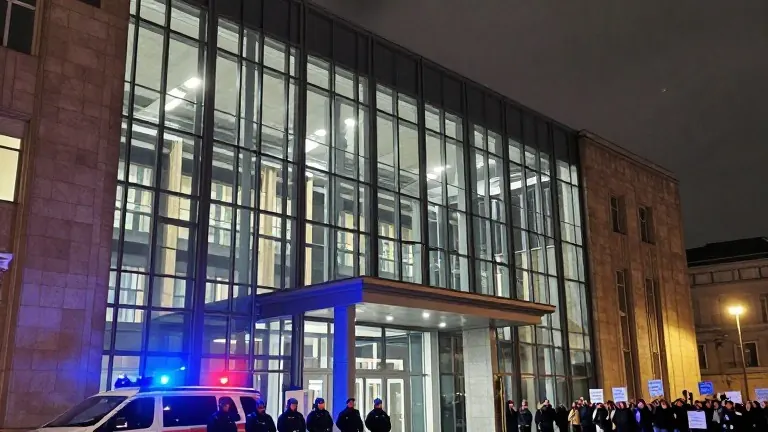
Riot police in Paris, Lyon, and Toulouse charged at demonstrators and deployed tear gas on Halloween night. These actions marked the latest flashpoint in a series of nationwide protests driven by anger over high living costs and failing public services. Authorities had deployed heavy security forces to prevent a repeat of the riots and looting that occurred on October 17.
The marches were largely peaceful through the afternoon. However, tensions escalated as small groups of troublemakers attempted to break away from the main crowds. In Marseille, unauthorised protests also ended in friction. The interior ministry stated that radical elements in Bordeaux, Toulouse, Lyon, and Marseille tried to cause damage but were thwarted by security personnel. Officials also reported finding objects that could serve as weapons during security checks at railway stations and roads.
Participation numbers dipped compared to previous weeks. The interior ministry counted 320,000 protesters nationwide, with 70,000 in Paris. This is down from 410,000 the previous Saturday and 550,000 on October 17. The current crowd included students who began mobilising in September, trade unions, and a smaller group of Yellow Vest protesters. All factions cited rising inflation, high fuel prices, and President Emmanuel Macron's government as key grievances.
Jerome Rodriguez, a protester in Paris, criticised the leadership. "The French economy is doing badly no matter what happens, because today we're being run by a group of incompetents who juggle billions, while families are struggling with a few cents," Rodriguez said. He added that the goal was to shout demands louder to force a government response. Far-left leader Jean-Luc Melenchon marched at the head of the Paris demonstration, a move that coincides with his rising ratings ahead of the April presidential election.
The government faced financial headwinds as protests continued. On Friday, ratings agency Fitch revised the outlook on French debt to negative. Public debt now sits near 120% of economic output, while borrowing costs continue to rise. This pressure limits the government's ability to spend, particularly as it seeks to curb costs. The Chamber of Commerce estimates retailer losses from previous unrest exceed €1 billion, with other estimates placing the total at double that figure when including uninsured damage.
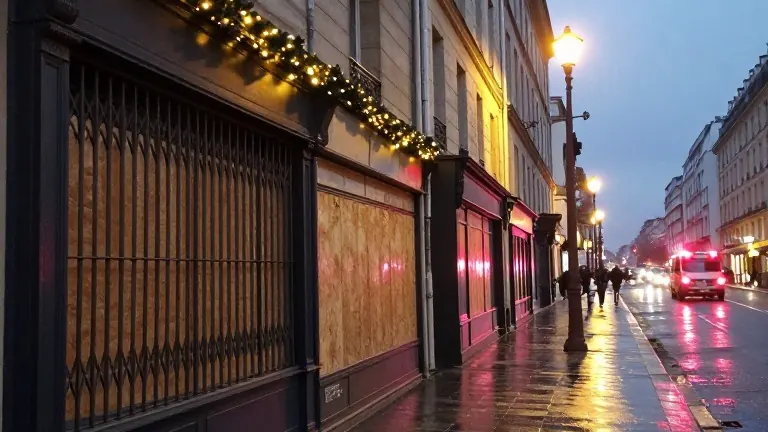
Student Aaron Berthier de Grandry, 15, joined his third consecutive weekend of protests in Nogent-sur-Marne. "When I was little, I was told young people were the future," he said. "Well, if we, as the future of France, lack resources, that means France will end up collapsing." The US Embassy advised travellers to avoid areas with planned demonstrations. Along Paris shopping boulevards, boarded-up windows and security grilles now sit alongside early Christmas lights.
The administrative court upheld a ban on a march between the Nation and Bastille squares. Authorities instead approved a route along boulevards on the eastern edge of the capital. Interior Minister Laurent Nunez vowed to prevent a repeat of the October 17 violence, noting that existing laws allow police to prohibit face coverings when public order is threatened. The economic contraction in the third quarter added to the strain on an already fragile government.
Source: The Star